
αφήστε ένα μήνυμα
Αν ενδιαφέρεστε για τα προϊόντα μας και θέλετε να μάθετε περισσότερες λεπτομέρειες, αφήστε ένα μήνυμα εδώ, θα σας απαντήσουμε το συντομότερο δυνατό.




Η καλύτερη αγορά που έκανα αυτόν τον χειμώνα! Το χρώμα και το πλέξιμο είναι εξαιρετικά και είναι τόσο άνετο! Πήγα από τη Νέα Υόρκη στο Μαϊάμι χωρίς να το βγάλω ποτέ. Υπερβολικά χαριτωμένο!!
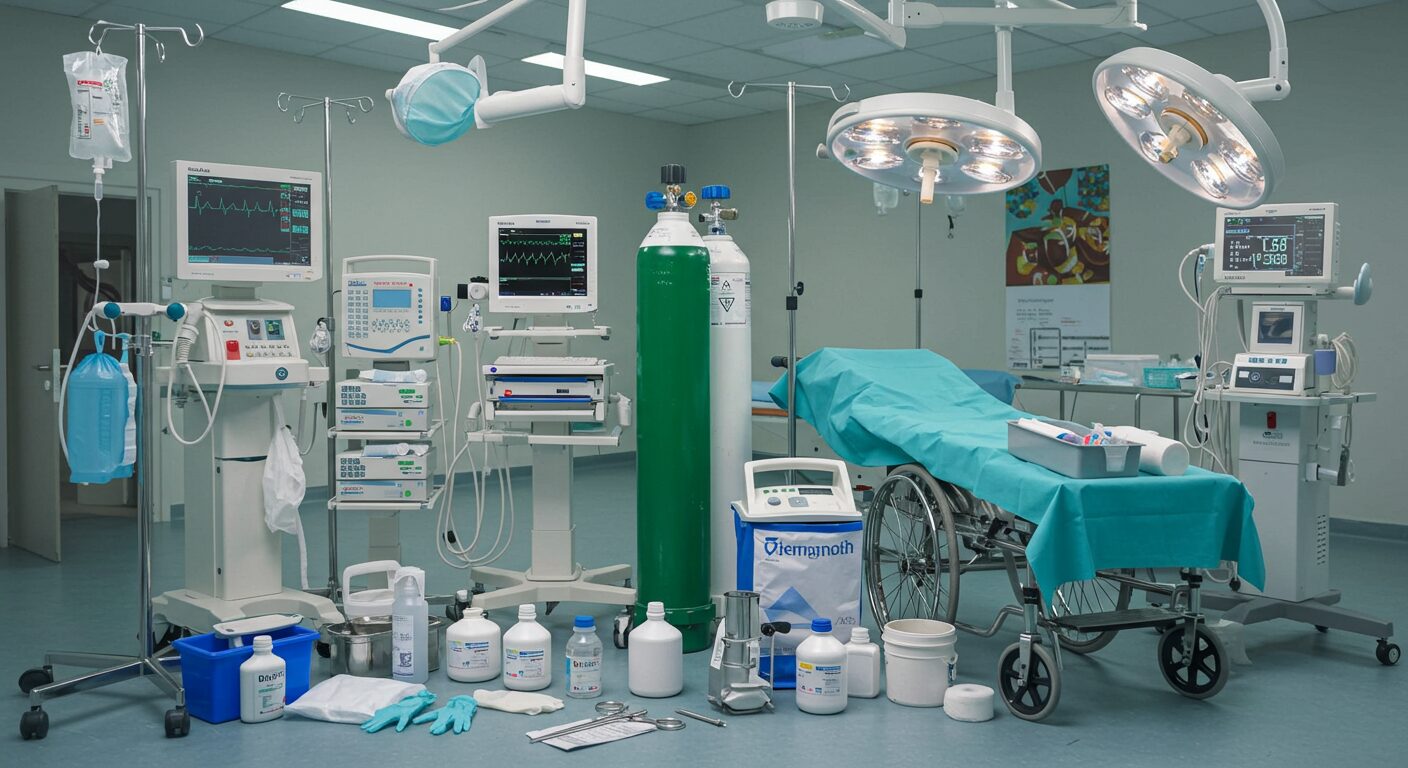
From Registration to Disposal: RFID Enables Full Lifecycle Tracking of Medical Equipment
As healthcare systems continue to evolve toward digitalization and refined management, the way medical equipment is managed is undergoing a profound transformation. From large imaging systems to everyday clinical instruments, from high-value consumables to mobile care devices, the wide variety and vast quantity of assets place significant demands on hospital management. Traditional methods relying on manual registration, paper records, and barcode scanning can no longer meet the requirements for real-time visibility, accuracy, and traceability. In this context, RFID technology has emerged as a key enabler for full lifecycle management of medical equipment, achieving end-to-end digital tracking from initial registration to final disposal.
To begin with, in the equipment intake and registration phase, RFID technology significantly improves data entry efficiency and accuracy. When newly purchased medical devices arrive at the hospital, each item can be assigned a unique RFID tag, which stores essential information such as model, serial number, supplier details, purchase date, and warranty period. Compared to traditional manual input, RFID supports batch reading and automatic identification, reducing human errors and enabling the integration of “asset and data” into a unified system. This standardized data foundation is critical for effective lifecycle management.
During the usage phase, the value of RFID becomes even more evident. By deploying RFID readers at key locations such as warehouse entrances, department doors, and corridors, hospitals can automatically identify and track equipment in real time. When devices are issued or transferred, the system records their movement and assigned departments without the need for manual input. This not only enhances allocation efficiency but also provides a visualized map of asset distribution, allowing administrators to quickly understand equipment status and avoid issues such as idle assets being hard to locate or shortages during urgent demand.
In daily operations, equipment inventory checks have long been a major challenge. Traditional inventory processes require significant manpower and time, and are prone to omissions and inaccuracies. RFID technology enables rapid large-scale scanning באמצעות handheld devices or fixed readers, allowing inventory tasks to be completed in a fraction of the time. The system automatically compares scanned data with records and flags discrepancies in real time, greatly improving accuracy and efficiency. This low-cost, high-frequency approach allows hospitals to shift from periodic inventory checks to continuous monitoring.
In the maintenance and servicing stage, RFID also plays a crucial role. Medical equipment typically requires strict maintenance schedules and calibration to ensure safe and effective operation. With RFID systems, each device can have a complete maintenance history, recording every inspection, repair, and calibration. When maintenance deadlines approach, the system automatically notifies relevant personnel, ensuring timely servicing. Furthermore, by analyzing historical maintenance data, hospitals can move from routine maintenance to predictive maintenance, reducing failure rates and overall costs.
For high-value and critical assets, RFID can be integrated with alarm systems and access control to enhance security. If a device is removed from a designated area without authorization, the system can trigger immediate alerts to prevent asset loss. When combined with staff identification systems, RFID can also log the specific user of each device, enabling full accountability and traceability. This level of precision significantly strengthens asset security management.
At the end of the equipment lifecycle, RFID provides valuable data support for disposal and decommissioning. The system maintains a complete record of each device’s journey—from procurement and usage to maintenance and transfers—allowing managers to assess its remaining value and service life based on real data. Once a device meets disposal criteria, approval and de-registration processes can be completed efficiently while ensuring consistency between physical assets and system records. These historical insights also support more informed procurement decisions in the future.
It is worth noting that RFID applications in medical equipment management are not limited to standalone systems. They can be deeply integrated with Hospital Information Systems (HIS), Equipment Management Systems (EMS), and IoT platforms to build a unified data ecosystem. Through data sharing and system integration, hospitals can achieve coordinated management of equipment, personnel, and spaces, significantly improving overall operational efficiency.
From a broader perspective, RFID transforms medical equipment management from static record-keeping to dynamic sensing, and from reactive control to real-time monitoring. Beyond improving operational efficiency, it empowers hospitals with data-driven decision-making capabilities. In an era of increasingly constrained healthcare resources, such intelligent and refined management approaches are of great practical significance.
Looking ahead, with the continuous advancement of IoT, big data, and artificial intelligence, RFID will play an even more important role in the healthcare sector. By analyzing equipment usage data in depth, hospitals can optimize asset allocation and procurement strategies. Combined with AI algorithms, predictive maintenance and intelligent scheduling can further enhance service quality and operational performance.
In conclusion, RFID technology spans every critical stage of medical equipment management—from registration and deployment to maintenance and final disposal—enabling true full lifecycle tracking. It not only addresses the limitations of traditional management methods but also provides a solid foundation for the development of smart healthcare systems. As digital healthcare continues to advance, RFID will undoubtedly become an indispensable component of modern medical asset management.

Λεπτομερείς πληροφορίες και PDF

Επικοινωνία μέσω email υποστήριξης.

Επαγγελματική τεχνική καθοδήγηση.

Επικοινωνία μέσω email υποστήριξης.



ΣΥΝΔΕΣΜΟΣ

Youtube



 IPv6 ΥΠΟΣΤΗΡΙΖΕΤΑΙ ΑΠΟ ΔΙΚΤΥΟ
αφήστε ένα μήνυμα
Σάρωση σε Wechat/Whatsapp :